Field Notes: On Care, Prevention, and What We Carry
I listened to an episode of Rethinking while walking Jungle Beach with my dogs. Adam Grant was speaking with a Eric Topol, a cardiologist who dismantles the glossy promises of the longevity industry, how much of what is marketed as prevention is actually late stage detection dressed up as control. Despite being American based and their medical system is not publicly funded like ours up north, many of Dr. Topol’s structural critiques do still exist here. The tendency to prioritize detection and treatment over prevention and community-based care is not unique to one system.
He talked about why total body for-profit MRIs do not make sense. By the time a cancer is large enough to be visible on an MRI, he said, it is often already too late, echoing the idea that an ounce of prevention is worth more than a pound of cure. Yet our systems continue to rely on blunt tools like age thresholds and broad screening categories, despite knowing that risk is far more unevenly distributed. Only a portion of women are at the highest risk of breast cancer, but we continue to screen primarily based on age alone. It is inefficient. Outdated. Easier than rethinking the system and confronting the interests invested in keeping it as it is. It brought a small sense of relief to hear that even with our current systems, some people still slip through the cracks, and many gaps are systemic, not individual failures.
On Haida Gwaii, physicians are advocating to bring CT imaging home, and they are right to do so. In stroke and neurological emergencies, timely imaging can mean the difference between recovery and permanent harm, or between life and death. For rural and remote communities, delayed diagnosis compounds existing inequities, and the absence of local CT imaging places people at unnecessary risk. Supporting this initiative is about equity, safety, and recognizing that rural lives matter.
At the same time, living here also means fewer formal supports. Fewer childcare spaces. Fewer after school programs. Fewer paid caregiving options. When gaps appear in the system, they do not disappear. They are absorbed locally by families, neighbours, coworkers, and volunteers. Care lands on community, often quietly, and often without relief.
This is why advocacy matters at multiple levels. Supporting a CT scanner is essential, and it should not stand alone. Strengthening rural health care also means investing upstream in prevention, in caregiving supports, and in the conditions that reduce how often emergency care is needed in the first place. These goals are not in opposition. They are complementary. The same system that responds well in crisis is strongest when it also supports health, capacity, and care long before people reach that point.
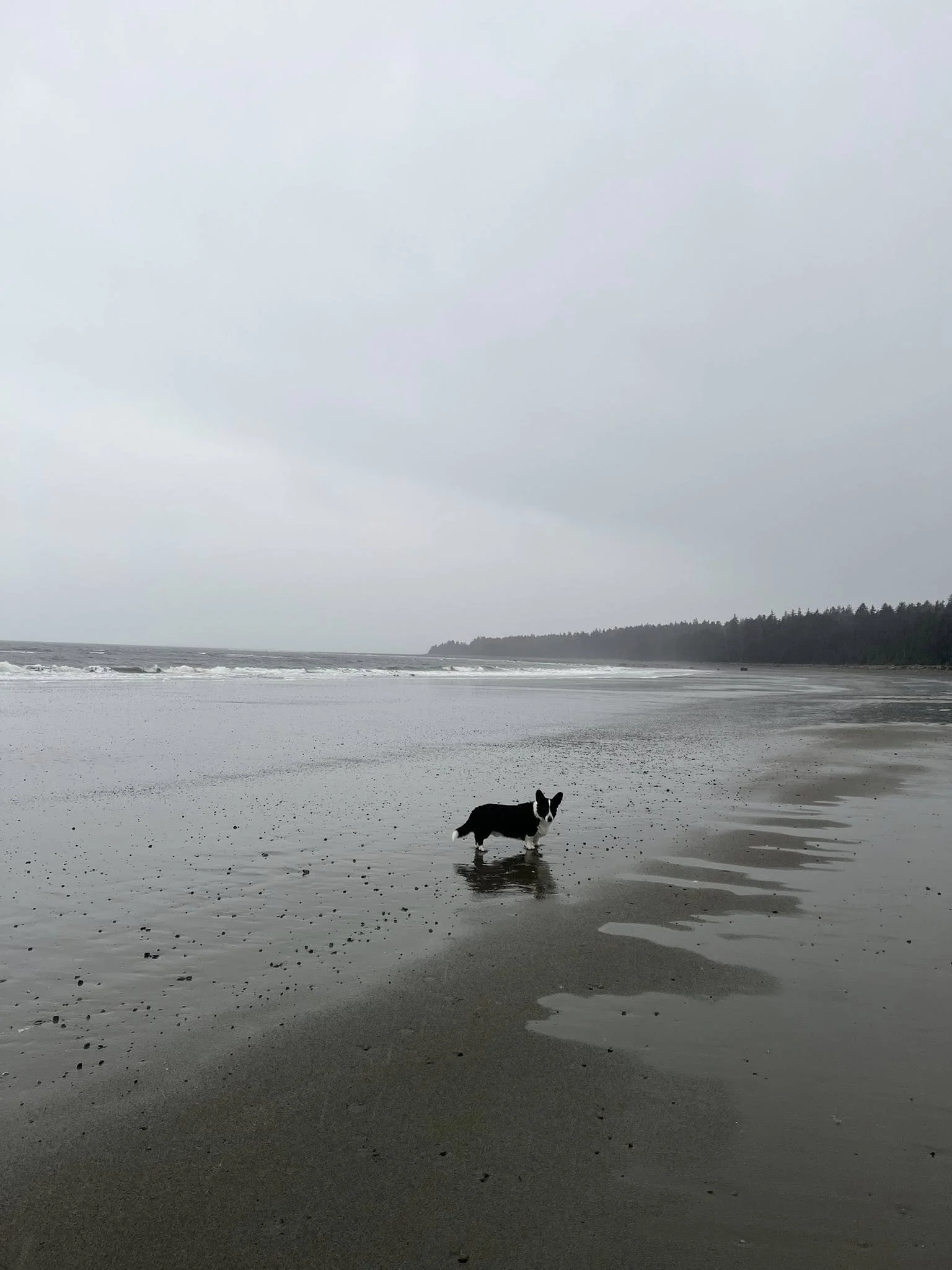
As I walked, Jungle Beach looked exactly like it earns its name. Massive driftwood logs tangled together, tossed up by storms, bleached, heavy, and immovable. I felt like that landscape mirrored my own life lately. Grief does that. Loss rearranges everything. The terrain changes, even if the shoreline is familiar.
I found myself imagining a health system built like this beach, reactive instead of preventative, waiting until things are visibly broken before responding. We invest heavily downstream in treatment because that is where damage is undeniable. Upstream work, true prevention, thoughtful design, and support before collapse, is quieter. Harder to sell. Harder to measure.
I keep returning to a question that sits quietly in my body. What sustains us when our energy is stretched thin? What do we draw from when giving has become habitual rather than heroic?
Being solely family based when you have a partner with a disability does not centre care for those caring for others. Love at home is not enough if there is no wider community to absorb some of the weight. Without that buffer, caregiving can narrow and isolate. Not because care is too heavy, but because it was never meant to be carried alone. That narrowing is not a personal failure. It is a structural one.
This raises quieter, more hopeful questions. How do we help people care before illness asks it of them? How do we build communities where support is practiced early, not summoned only in crisis?
When we talk about downstream care, we often frame it as tragic, and it is. But it is also an immense privilege to be part of. When there is nothing left to fix, nothing left to optimize or treat, presence still matters. When the tools in the toolbox are exhausted, something else remains. Cooking. Cleaning. Sitting. Crying. The quiet work of being human with one another.
Care does not disappear when medicine runs out of answers. It shifts form.
We design systems often that prioritize intervention over prevention, outcomes over endurance, efficiency over relationship. Or are heavily influenced by southern politics that could risk profits over prevention. I have hope that we are shifting, that we can be that shift. Caregiving reminds me that care itself is infrastructure. It is what holds people together when everything else fails.
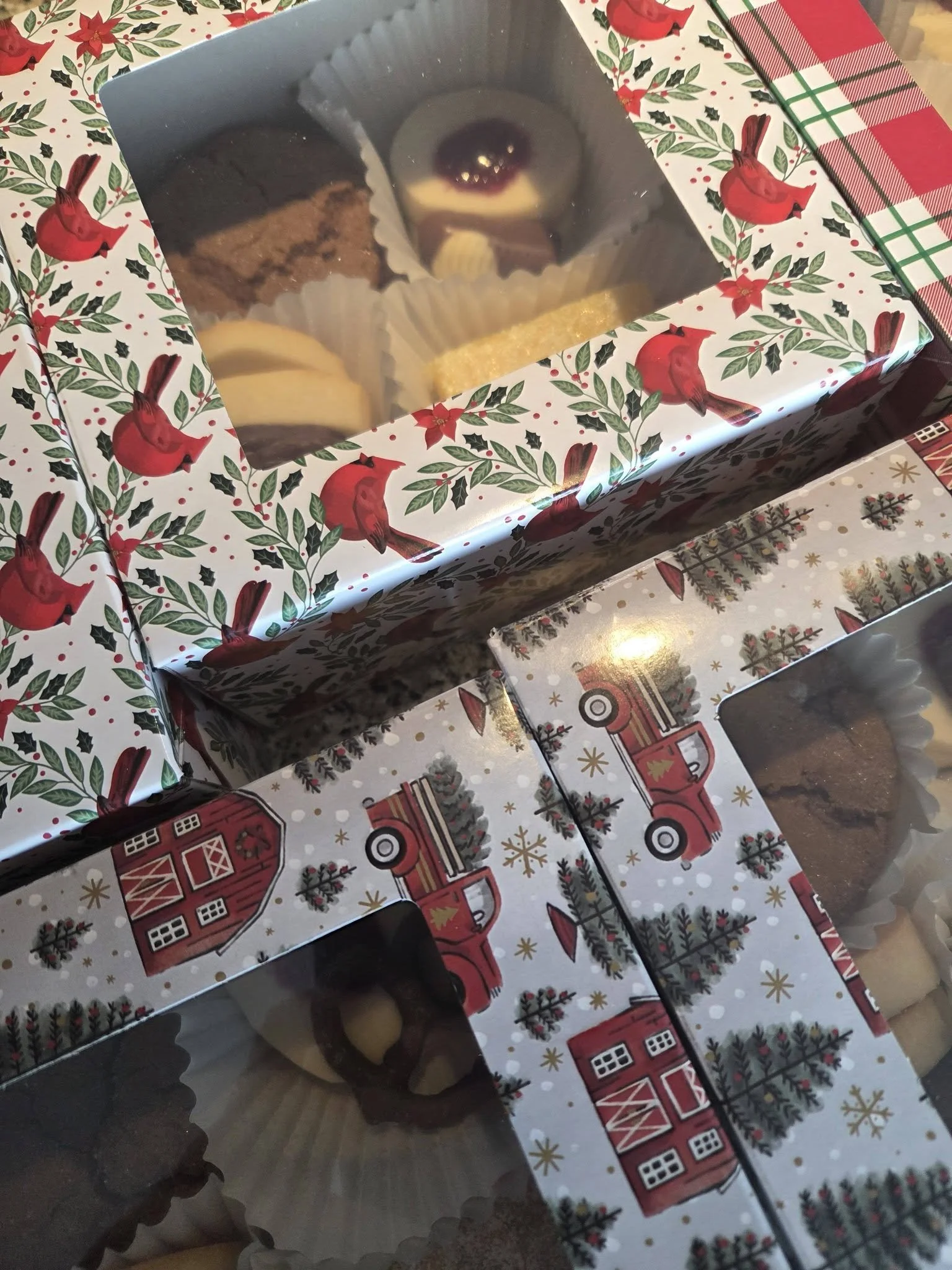
I have learned to prepare for care in small, practical ways. Soup in the cupboard. Medications within reach. Community built early and tended often. Not because I expect collapse, but because care feels lighter when it is already there, especially for myself. This winter, I found myself in the emergency room with my mother and still making Christmas baking and deliveries a priority. Not because I had to, but because I wanted to. I needed to thank the people who show up for me and to continue to practice reciprocity. I also wanted to thank the staff with an end of year dinner, even when celebration felt muted. They held me up when I needed it.
Jungle Beach ends up the way it does not because something failed, but because tides and storms leave their mark. Driftwood gathers where it can be held. I think about care the same way. When we invest only in response, we wait for the storm. When we invest in prevention and community, we shape the shoreline before it arrives.
This is not a conclusion. It is a field note from a season where I am noticing how much we carry, how much we need one another, and how much care still matters, not only when nothing else can be done, but long before we reach that point.
