Field Notes: She was my Community
My mom was diagnosed with stage 2 cervical cancer on February 13, 1998. I was five years old. After kindergarten mornings in the old trailers at Queen Charlotte Elementary Secondary School, I would go to the bakery where she worked, to eat a pizza bun and to drink a can of my favourite juice. Often, we’d enjoy a chocolate mousse-filled croissant. I’d watch her slice bread and bag them, before we headed home up the hill.
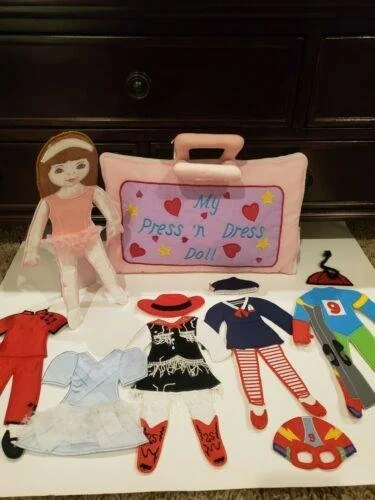
She was back and forth, Haida Gwaii to Vancouver, B.C., for treatments. She liked to send me letters and gifts while she was away. I remember my favourite, a Press ‘n Dress doll. While I spent many nights with my dad and brothers, I enjoyed receiving the toys. I was blissfully unaware that she was fighting for her life.
Survival Did Not Mean Untouched
In a journal she wrote, dated early 2000’s, mom thought I’d be a writer or a teacher. But by grade 10, I had proclaimed I wanted to be a doctor. Years after surviving cancer, she was living a life with her family. But the year after radiation, it had altered her body in ways that meant living close to bathrooms, adapting quietly and alone, and carrying on.
At six years old, my parents had bought a house near Spruce Point, worrying that if my mom passed, the family would need a home of their own. The treatments spurred an early menopause. I remember mom opening windows and fanning herself during a hot flash at the dinner table. Nothing was secret and as the last born and only daughter, I saw what survivorship looked like at an early age and the havoc that cervical cancer creates in a woman’s body.
A Family Like Ours
Despite her own struggles, mom lived for positivity. In her journal, she compared her life to a bridge. In her words:
“One of the most important parts of this bridge is its strength. I feel its cement posts are actually made of ‘positive’ thoughts. You see, after all is said and done, the rest is up to you, ‘the individual’ and ‘positive thinking’ can be your strength. After my treatments and in-between check-ups, positivity became my mainstream or life line. So you see, there is always strength in any structure. Not just in a bridge but in the mind of a human being.”
This journal I am reading, was a gift from a friend, Christmas 1999. Her friend, a woman who passed away April 2000 from cervical cancer, left behind a mirror of our family structure. She was my mom’s confidant, support, a friend who not only cared but understood her struggle. She and mom were going to try to write a book, share their stories, woven together. Unfortunately it never made it that far. Instead, the papers served as the last remaining portal for my mom to share her life with her friend.
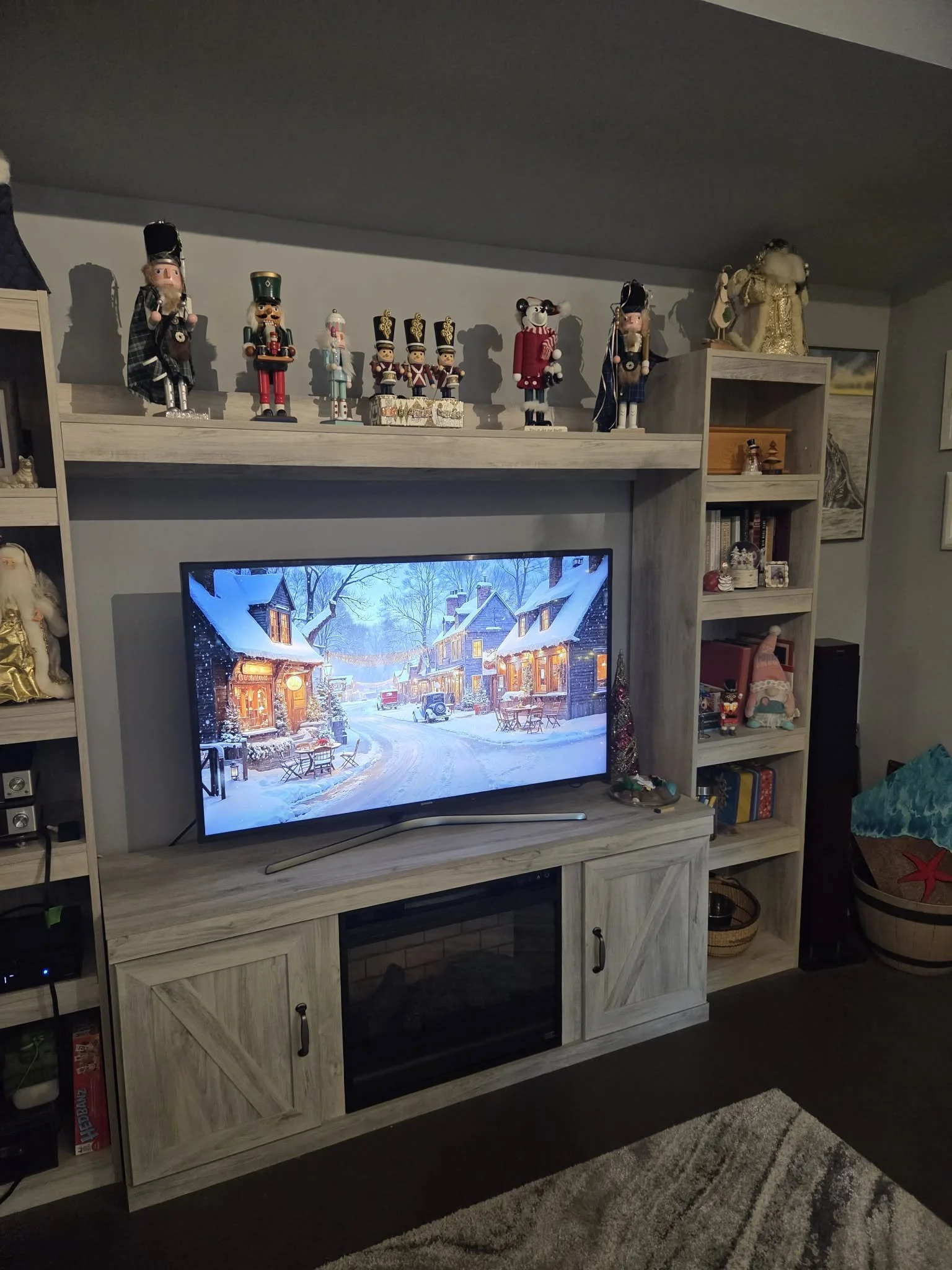
The woman’s family remains on our mantle, framed, still to this day. Amidst the Christmas decorations (we often referred to our mom as the Christmas Queen, well deserved with 49 nutcrackers counted last week), sits a small silver framed picture.
We know her name, we know how fortunate we were to have our mother for nearly three more decades. Mom showed us how to honour someone, long after they are gone.
The Years That Followed
Reading those pages now, I realize how much of my own life quietly formed in the margins of my mother’s survival. In the years after her cancer, I learned what it meant to live with both gratitude and constraint. I remember wanting to hike with her as a kid, wanting to wander farther down a trail, while she quietly calculated where the next washroom might be. These were not conversations, just adaptations. Cancer did not end when treatment ended. It followed us into ordinary days, into planning, and into movement.
I think that is where my early desire to become a physician came from. Not ambition, exactly, but fear. Fear of not knowing enough. Fear of losing her. A child’s belief that if I learned enough, studied enough, helped enough, I could protect the people I loved. Could I help women like my mom? Could I offer something steadier to my own family? I didn’t yet have language for survivorship, but I understood responsibility.
And yet, what she modeled was never fear alone. Despite everything her body carried, my mother worked constantly and purposefully. She folded newspapers at The Observer. She worked at BC Ferries. She became an accounting clerk with the School District. And then, later in life, she returned to school, earning a diploma with honours from Northwest Community College as a Special Education Assistant in April 2010. She worked with youth for the rest of her career. She ran homework help. But what she really did, was she showed up and alongside the youth she mentored, she kept learning.
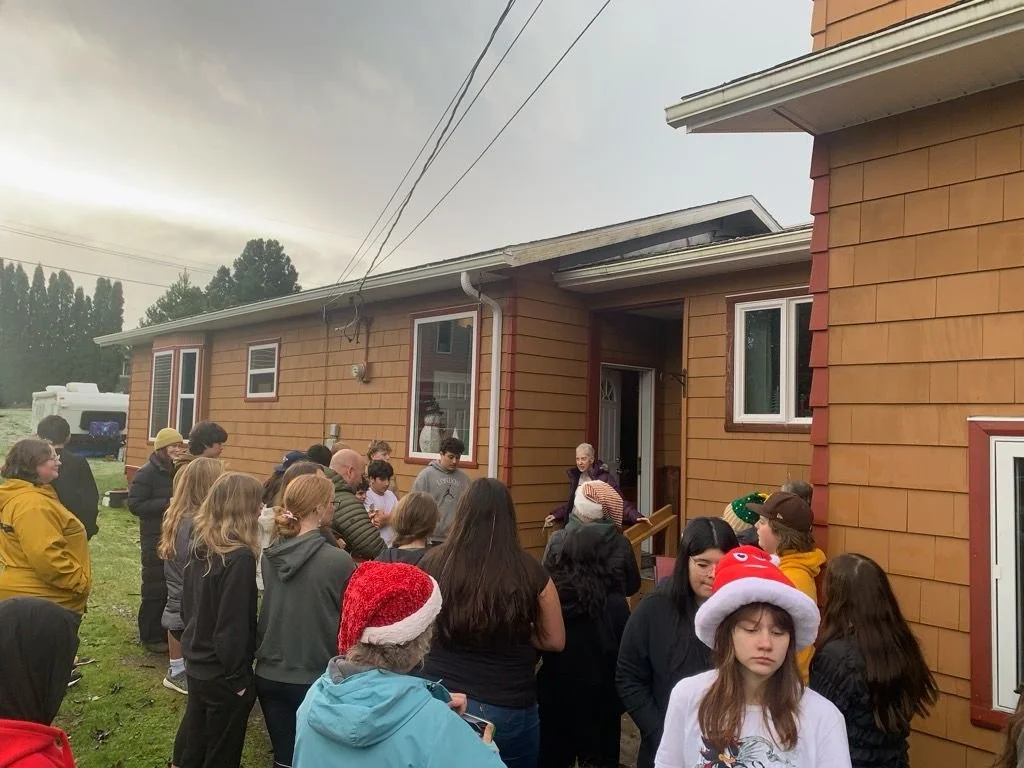
This Christmas, the school family showed up for mom and sang her Christmas carols. That was the most spectacular moment, something money could not buy. I can’t describe her impact any better than this.
My Journey

I did a Bachelors of Health Sciences and by my second year at university, I knew I was never going to go into medicine. I thought about transferring into teaching. It was a meeting with an academic advisor that changed everything. She suggested I do an honours degree research study. From there I learned about EcoHealth. It was a way of understanding health as inseparable from place, relationships, systems, and community. From there, I completed a Masters of Public Health, and I chose to come home.
Home was not an absence of ambition. It was a return to context. To people, to land. To the kind of work that allows you to see the impact of your efforts, not in abstracts or metrics alone, but in faces, programs, and relationships that endure. I wanted to be close to family. Close to community. Close enough to be useful. After years of studying systems from a distance, I wanted to participate in one.
In many ways, this choice echoed what my mother had always modelled: learning with purpose, working where you are needed, and showing up fully in the place that raised you. I sometimes wonder if I came home knowing, in some quiet way, that time was not unlimited. Not in dates or diagnoses, but in instinct. A sense that proximity mattered more than progress, that being near was its own kind of work. I always loved to stop by and make my parents a meal when I could, especially on their wedding anniversary.
Drawn In
I was largely self focused in my twenties, as most people are. Building independence, chasing possibility, learning who I was away from home. But over the last five years, something shifted. It felt less like a decision and more like a pull.
My partner and I began dating seven years ago. Early on, my mother said to me that choosing to be with someone in a wheelchair would be hard. She said it honestly, without judgment. And then she supported me fully. So did my dad. There was never hesitation in their love, only care for the realities ahead.
Five years ago, my mom broke her back while putting a turkey in the oven (a very large turkey). An ordinary moment that changed everything. I joined her in that recovery, learning what patience actually looks like. How progress slows and resilience becomes quiet. Over time, there were more health challenges, more adaptations, more recalibrations. It became familiar. Not easy, but familiar.
Last winter, on the final day of school before the holidays, she tripped on her way to work and broke her hip. When I got that phone call, I remember thinking here we go again. And still, I rationalized it. Early menopause. A body that had carried more than most, earlier than most. My dad was always by her side.
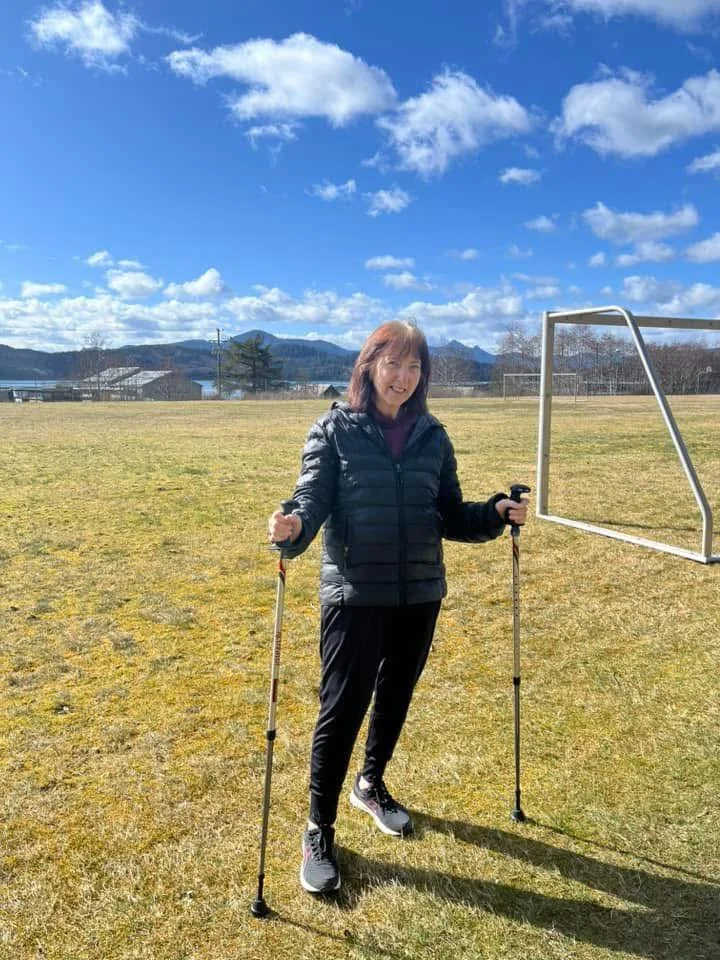
That Christmas, they spent time in Prince Rupert hospital. I sent wrapped gifts with them on the medevac, hoping to preserve something normal. When she was able, we began walking together again. Walking groups. Short routes near home, along the beach. Small victories. Hope, stitched into routine.
Staying Close
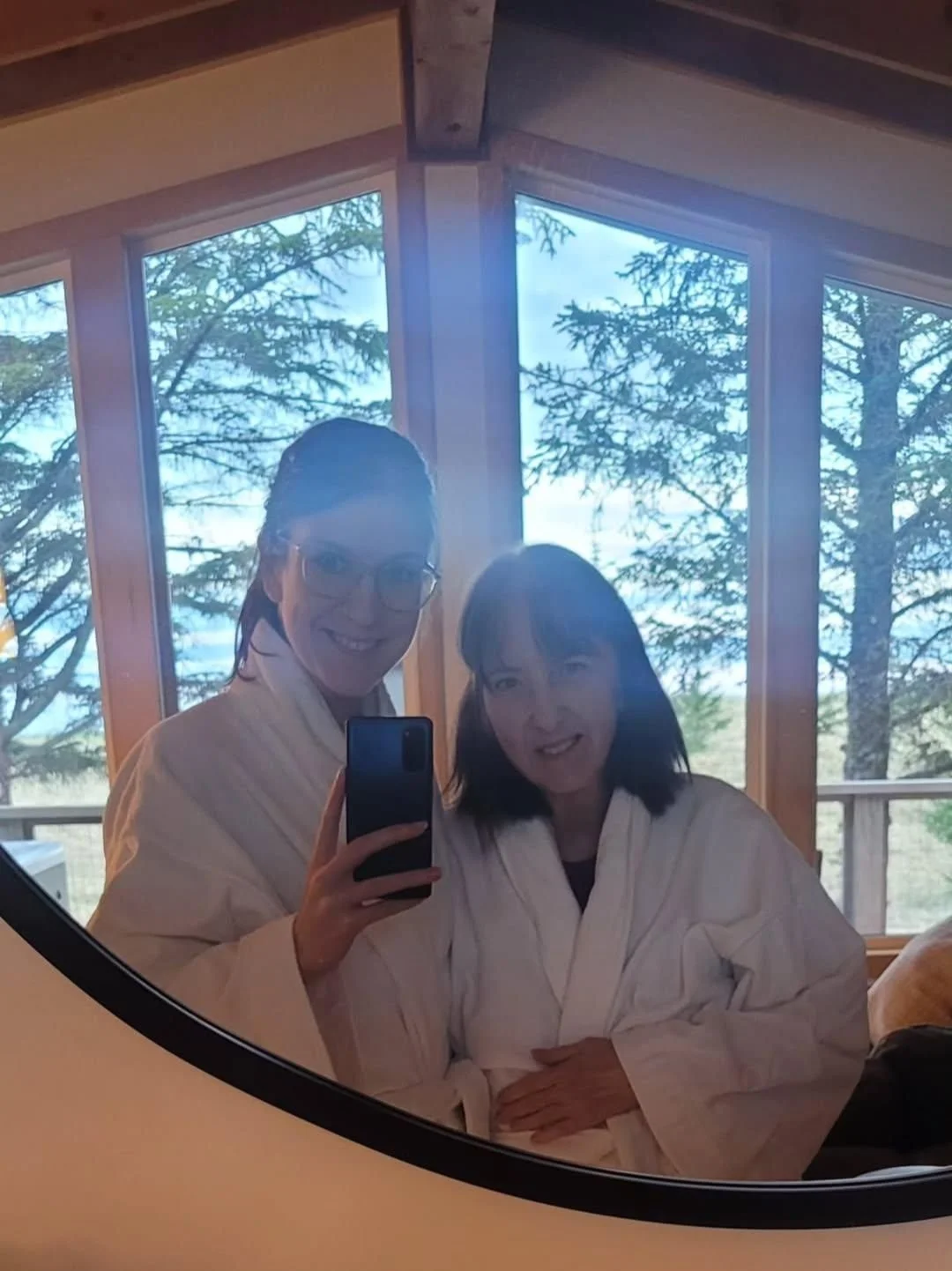
In April, everything changed. The cancer returned, but this time stage 4. In the pelvic region, in tissue already altered by radiation decades earlier. It was inoperable. And yet, she remained positive. Not in denial, not performative, just grounded in the present moment. She had already been there, on her bridge.
We went to Haida House in Tllaal for a staycation before her first chemo treatment. If I could suggest anything to a family wondering what to do, it’s do it all, before the treatments begin. Cherish the early moments of energy, as treatment takes a lot of it away. We had a quiet night together, sitting amidst uncertainty, but knowing for certain that presence matters most.
And maybe that is what community looks like at its most human. Not a network or structure. But staying close when the world asks you to choose what matters most.
She Was My Community
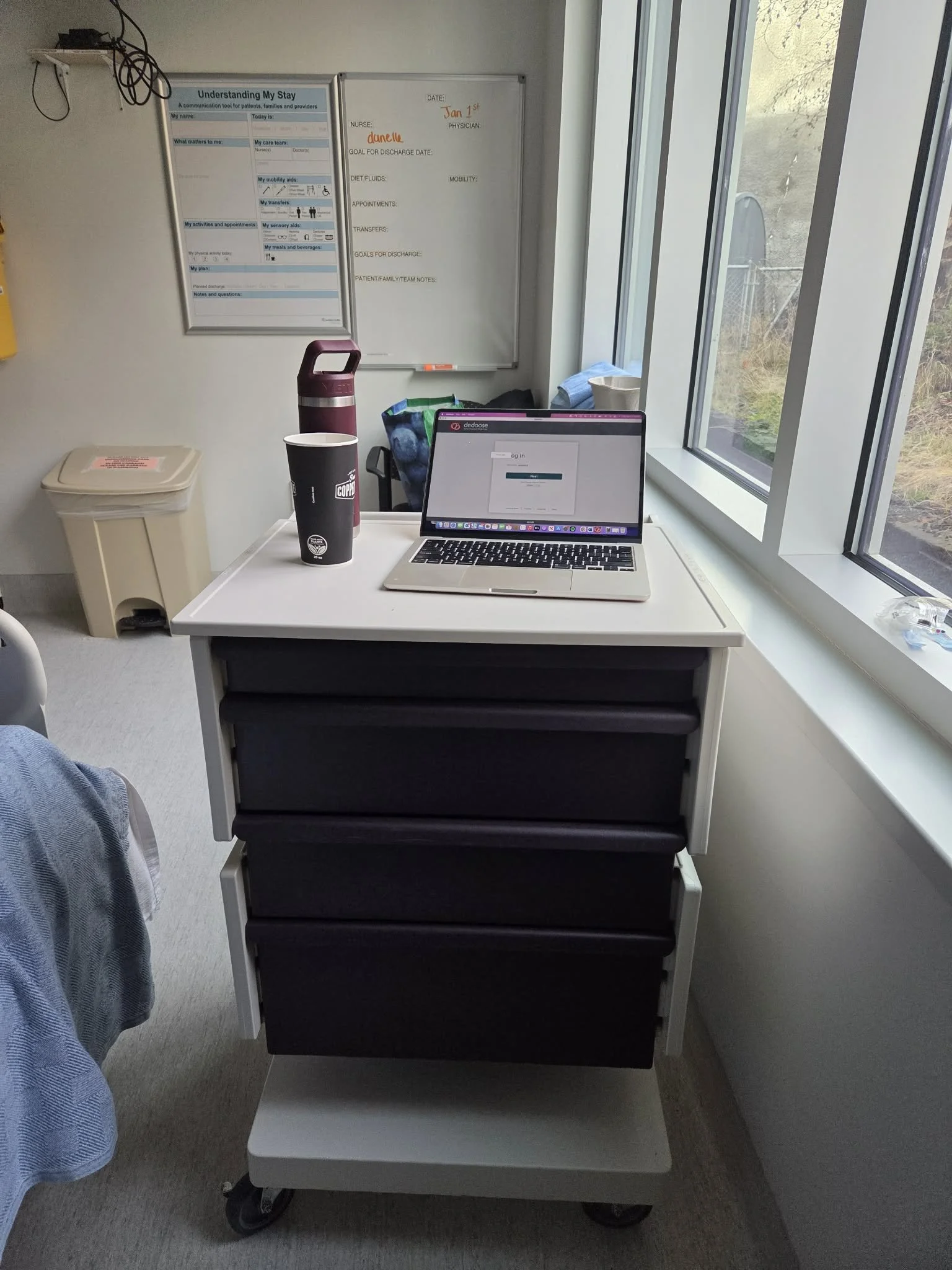
The hospital is not an easy place to be. Especially at your mother’s bedside. She knew that. I wrote 7,000 words of a research paper at her bedside in the early days, thinking she might return home, and I could multitask while she slept. Then her numbers dropped, we entered an all-too-familiar room where the end of life looms, and I swiftly closed my laptop.
I stayed overnight with her a few times, the lights low, the hours long. On the first night, despite knowing the end was near, she ordered me breakfast and lunch from her hospital bed. It was such a small thing. And it was everything.
Illness had taken her job title. It had taken her strength. It had taken so much of what she once moved through effortlessly. But it never took her title of mum. Even there, even then, she was still caring outward. Still thinking ahead. Still making sure I was fed.
In that moment, I understood something clearly. Community is not always loud or organized or visible. Sometimes it is one person, making sure you eat, when the world has narrowed to a room. She was my community.
And She Was Theirs
After she passed, the messages began to arrive. Friend requests from former students she had worked with over the years. Posts thanking her. Stories shared quietly, then publicly. Notes about how she had noticed them, helped them, and believed in them.
It mirrored what we found in her home. Christmas cards tucked into drawers. Birthday cards stacked carefully. Notes saved long after the occasion had passed. Blank graduation cards for the kids in June. Evidence of relationships she had carried with her, even long after the classroom door closed.
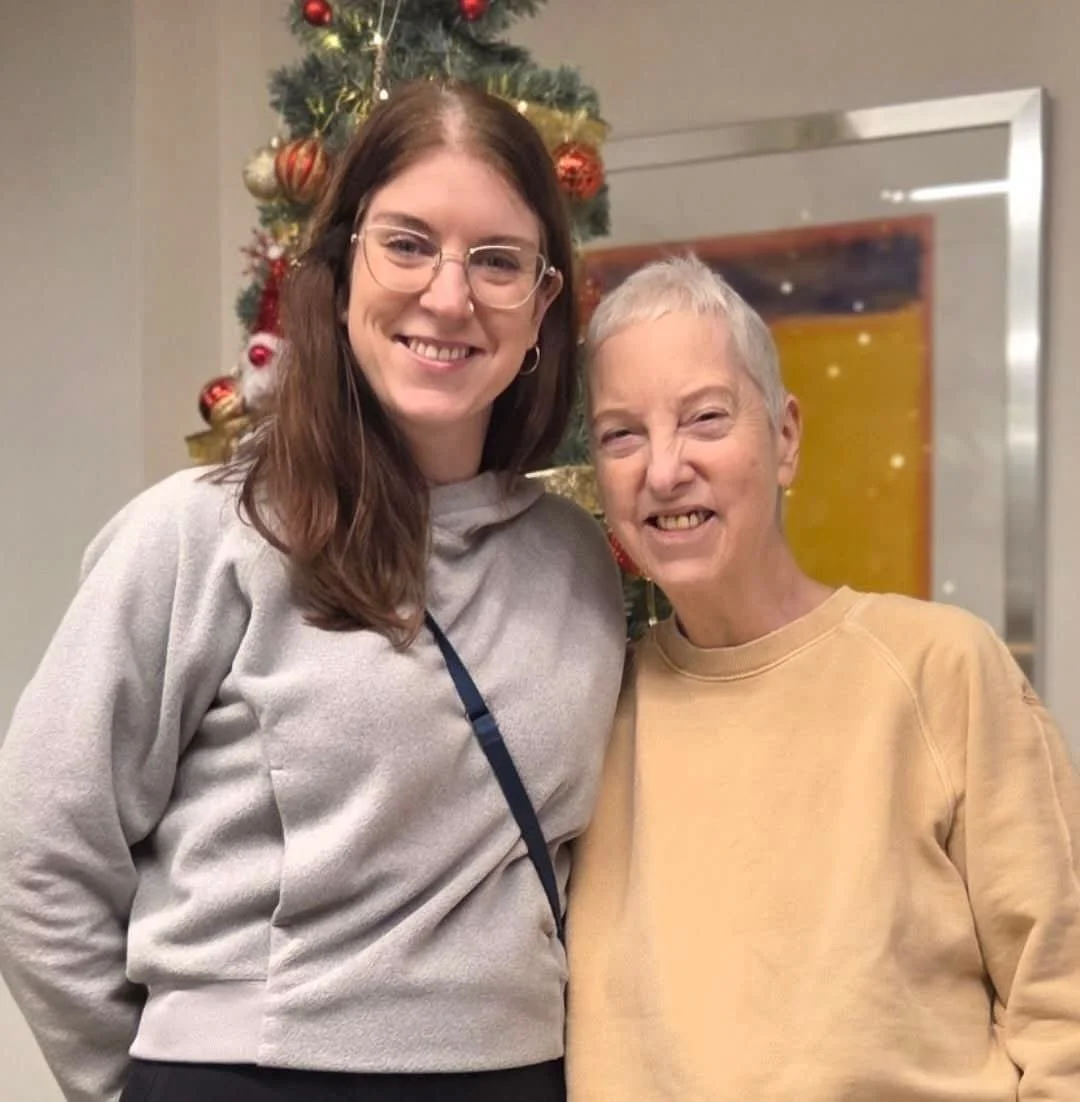
She had built community without calling it that. Through consistency and care, and showing up for young people who needed someone steady. She was my community first. And then, in grief, I realized how many others had been held by her too.
This is what remains. Not just memory, but impact. Not just love, but a network of lives shaped by it. She was my community. And she was theirs.
